Guides · The honest one
About the Wind (Yes, Let's Talk About It)
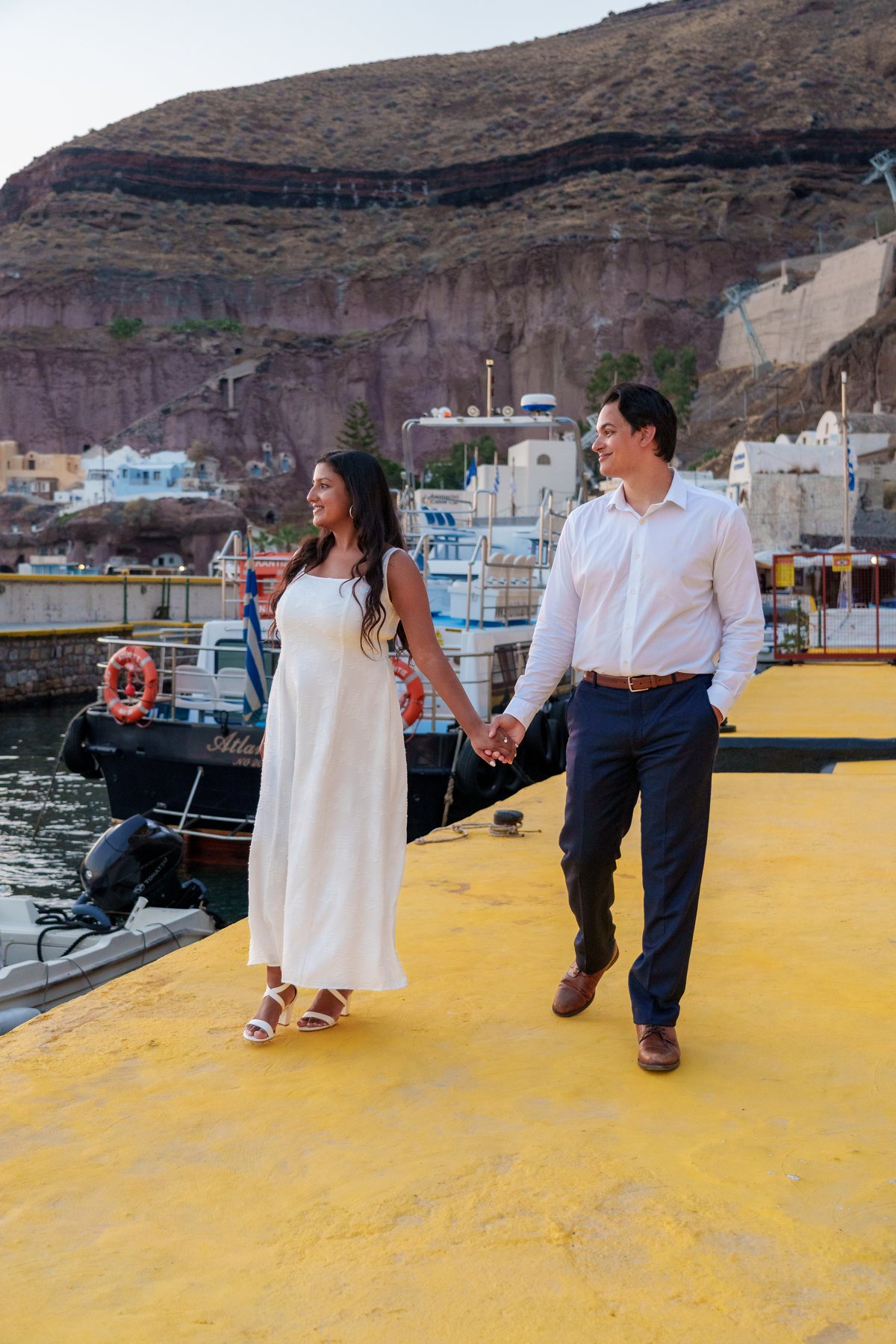
Yes — Santorini is genuinely windy, especially in July and August when the meltemi blows from the north. Most wedding days are fine; some need small adjustments to hair, veils, candles and sound. Good planning, wind-wise styling and a venue that sits out of the worst gusts solve almost all of it.
- Windiest months
- July–August (meltemi)
- Usual direction
- From the north
- Calmer, typically
- May–June · September–October
- What suffers
- Veils · candles · microphones
- What helps
- Sheltered positions, wind-wise styling
- ΑΙΩΝ sits
- Low, by the water, caldera side
How windy is Santorini, really?
Windy enough that pretending otherwise would be a disservice. The Cyclades sit in the path of the meltemi, the dry northern wind of the Aegean summer, and it blows most persistently through July and August — some days as a pleasant breeze, some days hard enough to restyle every hairdo on the caldera rim. Spring and autumn are typically calmer, but no month is guaranteed still: this is a small island in open sea with little terrain to slow the air down. As a rule of thumb, as of 2026 the pattern holds that mid-summer brings the strongest, most frequent wind and the shoulder seasons the gentlest — our best-month guide puts this alongside heat, crowds and sea temperature.
Here is the reframe that matters: wind is a planning input, not a verdict. Thousands of couples marry here every summer, meltemi and all, and the ones who planned for it barely remember it. The ones who planned a still-air wedding on a moving-air island — they remember it.
What does the wind actually do to a wedding?
Concretely, five things. Veils become sails: a long cathedral veil in a stiff breeze is either your favourite photograph or a wrestling match, depending entirely on whether you expected it. Hair worn long and loose will move constantly; that reads romantic in motion and chaotic in stills. Candles — open taper flames simply do not survive outdoors on a breezy caldera evening. Sound suffers most invisibly: wind across an unshielded microphone can bury vows and speeches in rumble, and light background music thins out fast in moving air. And light décor — unweighted linens, loose menus, tall arrangements — will migrate.
Notice what is not on the list: the sunset, the dinner, the mood. Wind rearranges details, not evenings.
How do you plan around it?
Every problem above has a known fix, and none of them costs the atmosphere:
- Hair and veil: choose a secured style or a shorter veil — or brief your photographer to embrace the movement; wind-blown frames are a Santorini signature for a reason.
- Flames: put every candle in a hurricane glass or lantern, or swap open flames for fairy lights, which no gust can blow out.
- Sound: use a windshielded microphone for vows and speeches, position speakers close rather than loud, and face speakers away from the wind line.
- Styling: weighted tablecloths, clipped menus, low and heavy arrangements instead of tall and delicate ones.
- Schedule: keep a little flexibility on the day — moving vows twenty minutes earlier or shifting the table a few metres solves more than any amount of equipment.
- Forecast: only trust it in the final few days. Long-range wind forecasts for the Aegean are guesswork; the useful signal arrives the week of the wedding.
Are some venues more sheltered than others?
Meaningfully, yes — and it is mostly physics. The meltemi arrives over open water from the north and hits the caldera rim first and hardest: terraces perched on the exposed cliff-tops take the full force of whatever is blowing. Positions set lower on the caldera side, close to the water, tend to feel less of it, because the cliff face itself absorbs much of the brunt before the air tumbles down to sea level.
That lower position is where our venue happens to sit. ΑΙΩΝ is on the caldera side of Fira, close to the water by the old port — and on most breezy evenings the terrace feels noticeably calmer than the exposed rim high above. We will not promise you a windless night; nobody on this island honestly can, and you should be suspicious of anyone who does. What we can say is that we work with the wind daily — candles go into glass, cloths are secured, and for ceremonies of up to 30 guests we provide chairs and umbrellas for shade before the sun drops. The full picture of the terrace and its position is on why ΑΙΩΝ is different.
Is the wind ever a good thing?
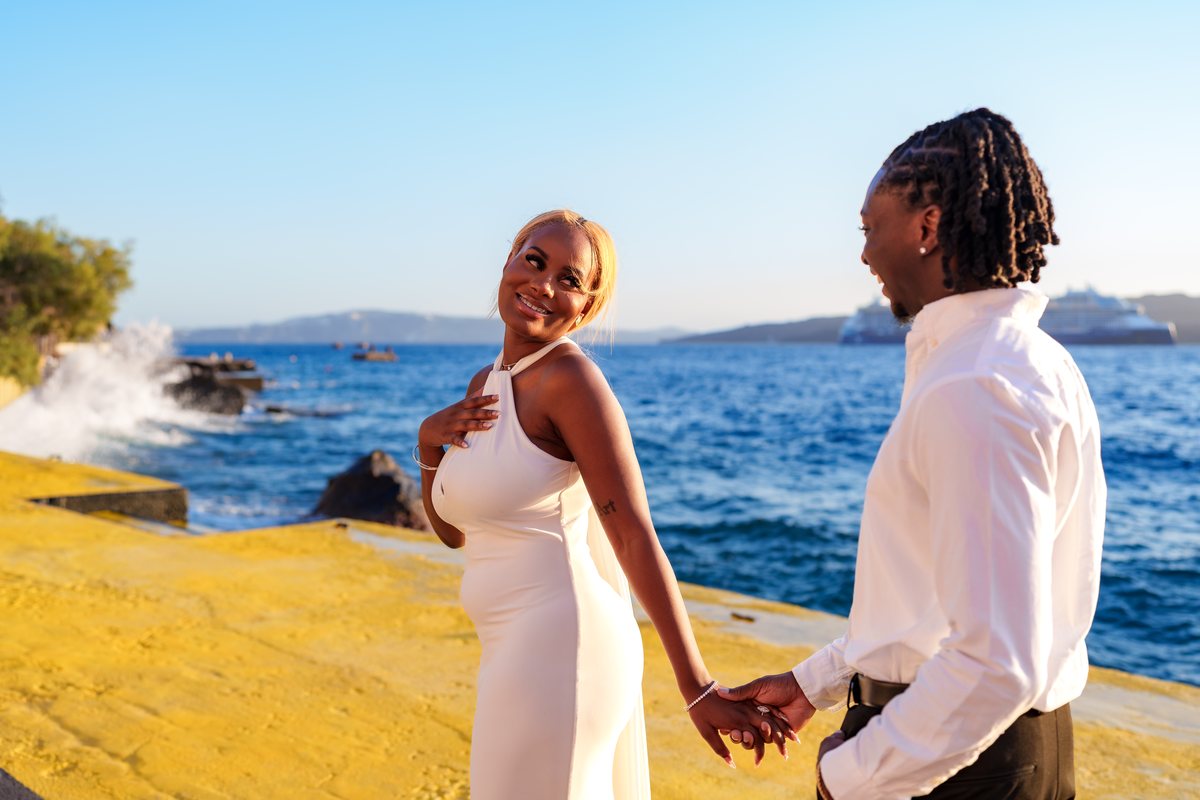
Often, and it deserves the credit. The meltemi is why an August evening on the caldera is pleasant rather than punishing — it carries the day's heat off the island exactly when you want to sit outdoors in formal clothes. It scrubs haze from the air, which is why many of the summer's crispest, most saturated sunsets follow a windy afternoon. It fills sails, if a caldera cruise is part of your plan. And photographers quietly love it: a lifted veil, moving hair, a dress pressed into silhouette — the wind is in half of the island's most famous wedding images, working for free.
Does the wind affect boats and the rest of the day?
Sometimes — and it is better planned for than discovered. The sea reacts first: on strong-meltemi days caldera cruises usually still run, but comfort drops and operators may adjust their timings, so if a boat features in your plans, keep it on the calmer side of the day and build slack around the handovers — the yacht-and-venue guide covers the sensible order of things. Transport on land is largely indifferent to wind, though anything involving hats, veils or loose paper on an exposed clifftop path will introduce itself to the gusts personally. The rule for the whole day is simple: the windier the forecast, the more the schedule should favour sheltered positions, and the fewer airborne accessories it should contain.
A realistic wind checklist for your wedding week
- Start checking the forecast about five days out — earlier numbers are noise.
- Confirm every candle has glass around it, or swap to fairy lights.
- Agree a fallback position for the vows with your venue or planner — even a few metres of shelter changes everything.
- Brief hair and make-up for a secured style if gusts are forecast.
- Ask for a windshield on any microphone, and test it at speaking volume.
- Then stop checking the forecast. The island has done this before.
Should you avoid July and August, then?
Not if that is when your people can come. Choose those months knowingly: secured styling, glassed flames, a windshielded microphone, and a venue position that ducks the worst of the gusts — then let the breeze do its good work on the evening heat. If your dates are flexible and stillness genuinely matters to you, aim for late May, June, September or early October instead. Either way, build the day itself around the light with margin to spare — the hour-by-hour timeline guide shows how — and the wind becomes what it should be: weather, not fate. When you are ready to talk real dates, our venue rental packages hold flat pricing in every season, breezy or calm.