Guides · The light itself
Chasing the Golden Hour
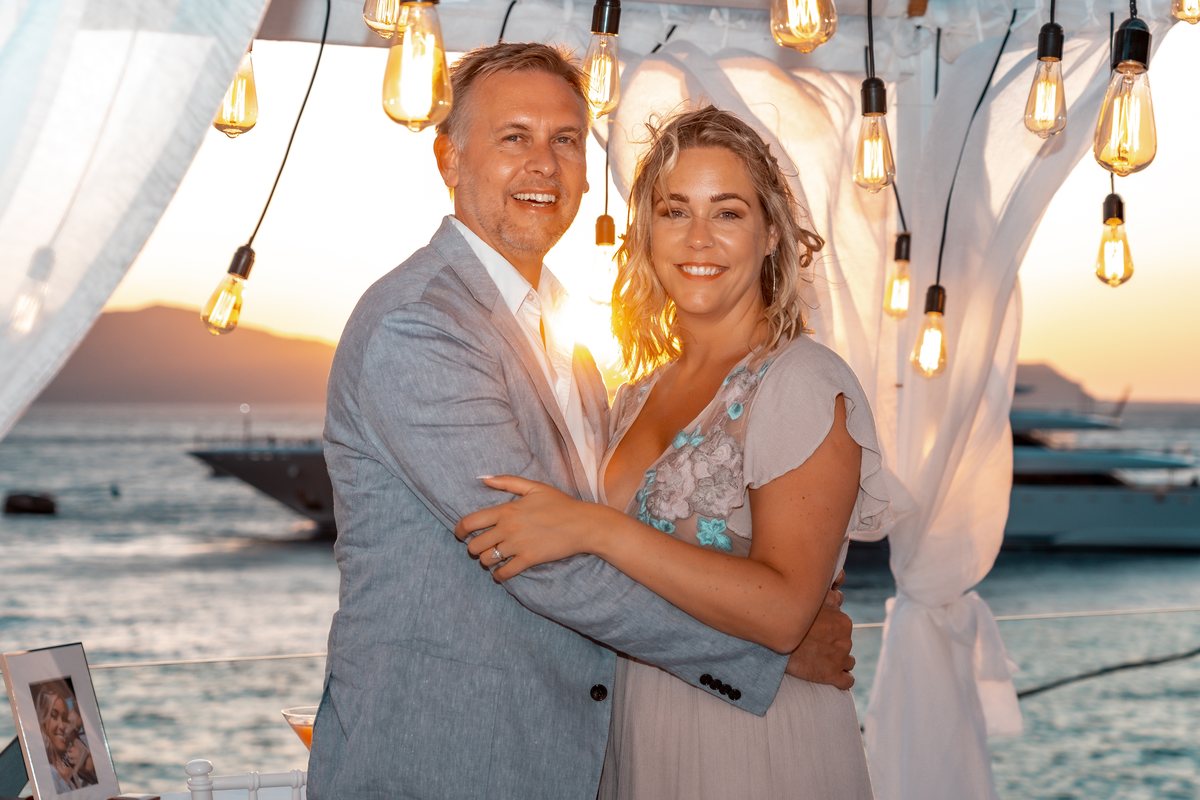
Golden hour in Santorini is the last hour or so before sunset, when low light crosses open water and hits the caldera's white architecture like a reflector. The island faces its famous sunsets west over the sea, so the light stays clean to the horizon. Time your ceremony to end as it begins.
- What it is
- Roughly the last hour before sunset
- Why here
- West-facing caldera, open water
- The reflector
- Whitewashed walls, everywhere
- The encore
- Blue hour, after the sun
- Ceremony rule
- End your vows as it begins
- At ΑΙΩΝ
- A terrace facing the sunset line
Why is golden hour in Santorini special?
Golden hour happens everywhere; Santorini just happens to be built for it. Three things stack in the island's favour. First, geometry: the inhabited caldera faces west over open sea, so the low sun reaches you across water with no ridge, no forest, no skyline in the way — the light stays clean from horizon to face. Second, the architecture: all that whitewash is, to a photographer, a landscape-sized reflector, bouncing soft warm fill into every shadow that would elsewhere go muddy. Third, the water itself, which doubles the show — the caldera picks up the sky's colour and hands it back, so the light seems to come from below as well as above. Put simply: for about an hour a day, the whole island works as a studio, and nobody has to set anything up.
When is golden hour, month by month?
The working rule: golden hour is roughly the last sixty to seventy-five minutes before sunset, stretching slightly longer in winter when the sun approaches the horizon at a shallower angle. Since sunset in Santorini swings from about 17:05 in December to about 20:40 in late June, golden hour begins anywhere from mid-afternoon in winter to about 19:30 at midsummer — which is why no photographer will give you a start time before asking your date. Look up your month in the sunset-times table, subtract an hour and a bit, and you have your window; then build the whole evening backwards from it, ceremony first.
Terrace by the water or clifftop — where should you stand?
Both work; they make different pictures. The clifftop gives elevation: layered rooflines, the caldera spread below, the classic look-how-high-we-are drama. Its costs are practical — the famous rim spots are shared, so golden hour arrives together with the crowd, and your photographer spends composition energy keeping strangers out of frame. A terrace near the water inverts all of it: the horizon sits at eye level, the sun lands in the sea directly in front of you rather than far below, reflections come off the water into the frame, and if the terrace is private, the crowd simply is not there — sixty uninterrupted minutes of couple, light and sea.
The honest answer is that the choice is really about what you want behind you: the island, or the water. Cliff for scale; sea level for intimacy and the horizon line. Many couples on our terrace get both anyway — portraits at the rail with the open water, then a few frames along the caldera path with the cliffs stacked behind.
What will your photographer ask for?
Nearly every wedding photographer working this island asks for the same five things, so grant them in advance. The golden hour itself — held free for portraits, with the ceremony scheduled to end as the light turns; not speeches, not cake, portraits. A buffer — running twenty minutes late costs exactly twenty minutes of the best light, which no camera recovers. A west-facing position to place you against the light. Freedom to move — a few minutes' walk along the caldera multiplies the backgrounds. And blue hour — the twenty-odd minutes after sunset when the sky goes deep indigo and the lights come on; couples routinely rank those unplanned frames among their favourites. Slot all this into the day using the hour-by-hour timeline guide.
What should you wear for golden-hour photographs?
The light is warm, so dress for warmth of tone. Whites, creams, champagnes and soft pastels drink golden light beautifully and bounce it back into faces; earth tones and dusty blues photograph richer than they look on the hanger; saturated neons fight the sky and usually lose. Fabric matters as much as colour on this island, because anything that can move, will: chiffon, silk and light linen turn the evening breeze into a styling assistant, which is exactly why flowing dresses dominate Santorini portfolios. Two practical notes from a thousand terraces: take the sunglasses off well before the session begins — they leave marks on the bridge of the nose — and bring comfortable shoes for the walking parts; hemlines hide more sins than blisters do.
How long does a golden-hour session actually need?
Forty-five minutes to an hour covers it generously: a couple of positions at the rail, a short walk along the caldera path for variety, the sunset frames themselves, and the first of blue hour — all without the session swallowing the celebration. Couples who squeeze photography into twenty minutes get twenty minutes of one background; couples who hand their photographer ninety get diminishing returns and a cold dinner. The efficient shape, agreed with most photographers working here: the ceremony ends as golden hour begins, portraits run until the sun is a hand's width from the water, everyone gathers to watch it land, and the camera quietly keeps working through the applause.
If your schedule can protect only one block of couple time all evening, make it this one. Family photos, table details and dancing all photograph well at any hour; the two of you in the last light do not happen twice.
What does golden hour look like at one venue?
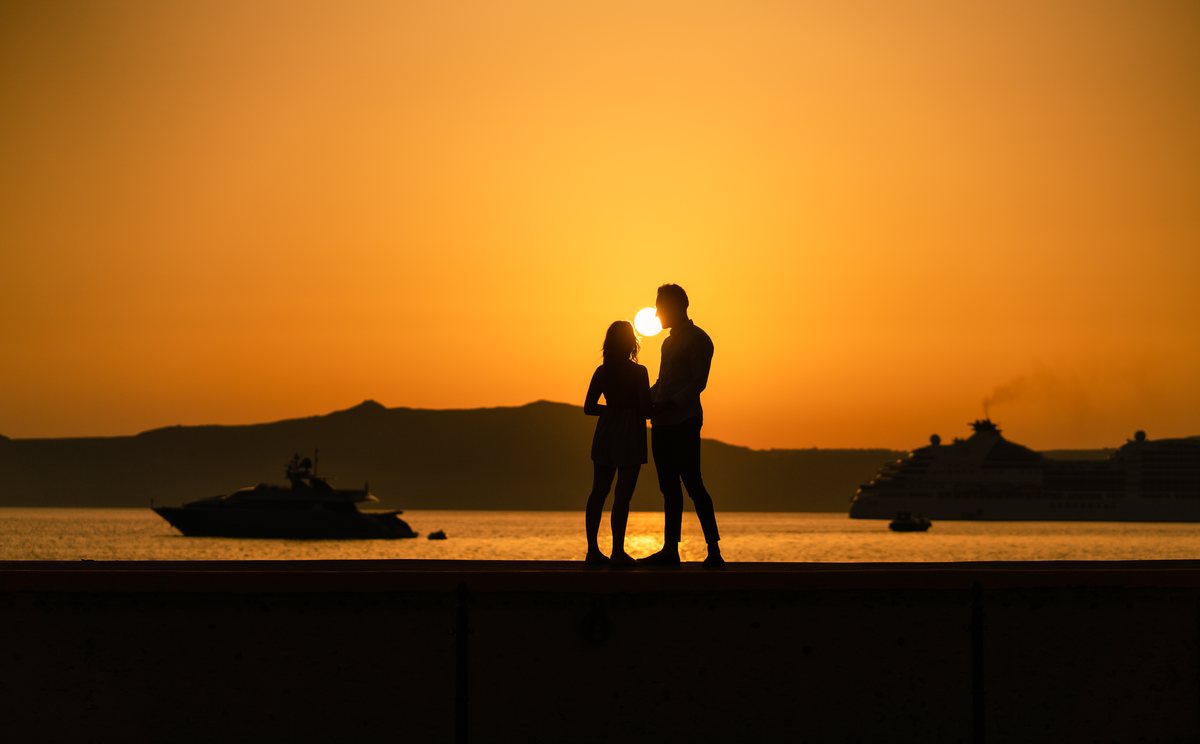
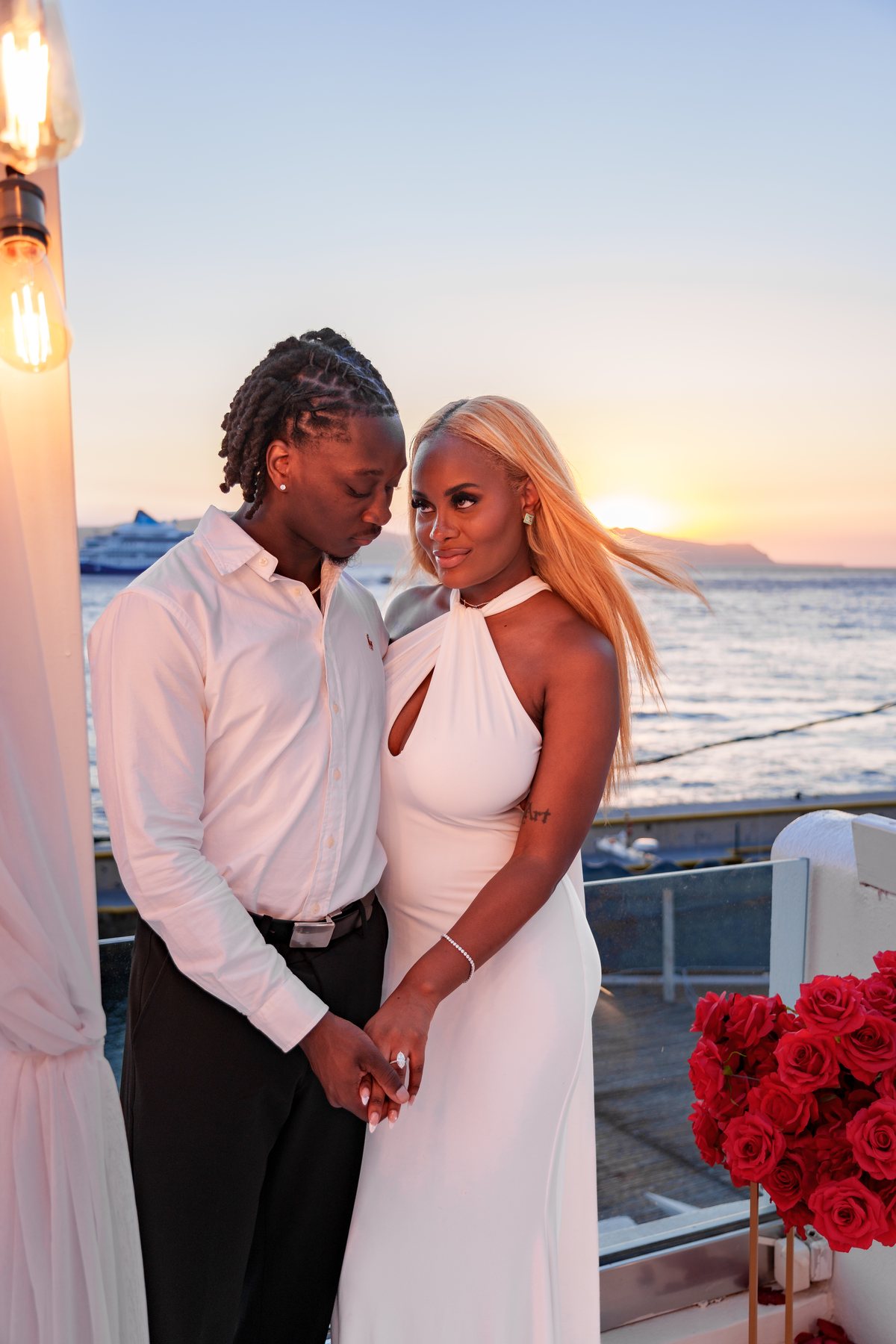
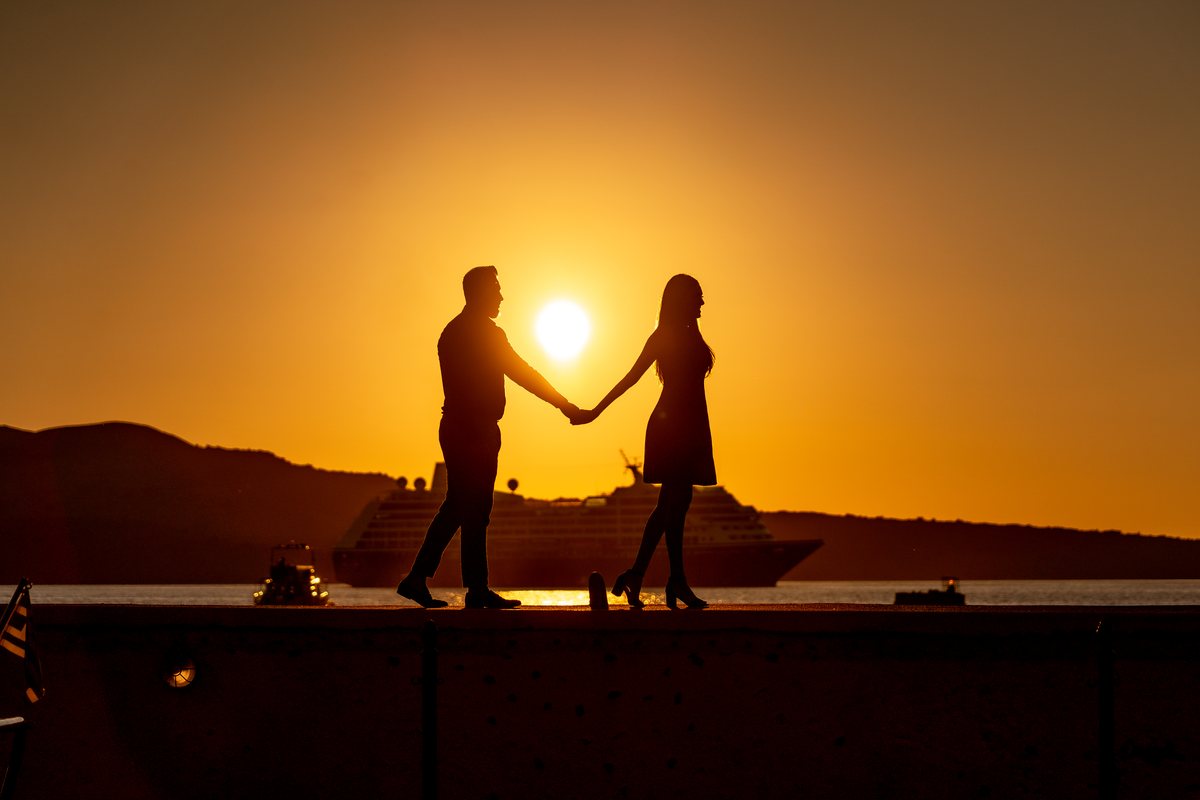
Theory is cheap; light is not. The frames below are real evenings on our terrace on the caldera side of Fira — unstaged weather, working light, actual couples. This is the hour as it lands here, at eye level with the water; there are many more evenings like these in the venue portfolio.
What if the day is hazy — or you miss the hour?
Neither is the disaster it feels like. Summer haze diffuses the light rather than killing it: sunsets go pastel instead of fiery, skin tones turn soft, and many photographers privately prefer it. If the schedule slips and the golden window closes, blue hour is the built-in rescue — cooler, moodier, arguably more romantic, with candlelight and the caldera's lights carrying the frame. And there is a morning secret worth knowing: because the caldera faces west, sunrise puts the whole cliff side in soft, even shade — no squinting, no harsh shadows, no crowds — which makes early morning the island's most underrated portrait light. The famous hour is the one before sunset, and it usually delivers — plan a sunset proposal or a sunset dinner around it with confidence — but this island photographs well at more hours than its reputation admits.